
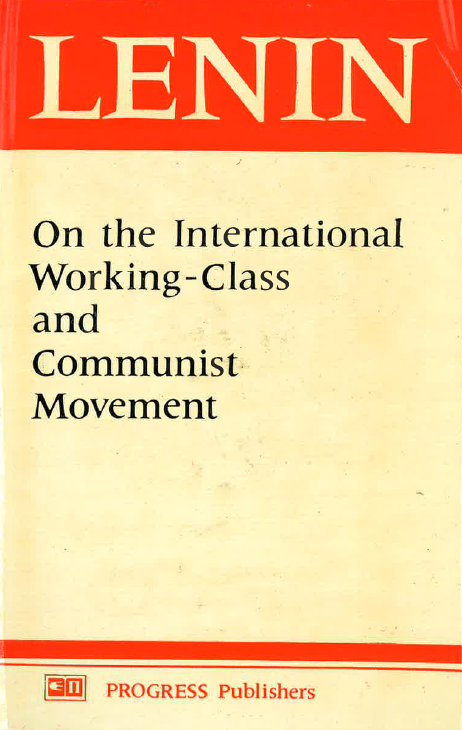
This volume brings together Lenin’s central writings on proletarian internationalism, the political and theoretical foundation upon which the Bolshevik Party built the Communist Third International in the aftermath of the October Revolution. Spanning his polemics against opportunism and social-chauvinism in the pre-war Second International, through to his wartime writings developing the perspective of revolutionary defeatism, to his post-1917 work founding and building the Comintern. This volume documents how Lenin fought to establish that the international unity of the working class is the objective basis of socialist revolution in the epoch of imperialism.
Lenin regarded the betrayal of internationalism by the leaders of European Social Democracy in 1914 as a historic turning point, and is why he concluded that a new, revolutionary International had to be built in political opposition to the reformist and centrist currents that had capitulated to their own ruling classes. Here readers will find Lenin’s efforts to draw the lessons of that betrayal; his sharp theoretical struggle against centrism (Kautskyism) as the disguised continuation of opportunism; his theses on the national and colonial question, which insisted that the anti-colonial struggles of the oppressed nations could only be won by uniting them with the revolutionary movement of the proletariat in the imperialist centers; and his fight for the independent political mobilization of the working class on a world scale against imperialist war.
For readers today, confronting a resurgence of nationalism, war, and the fragmentation of the workers’ movement along national lines, this volume is essential reading. It equips a new generation with the theoretical and historical grounding to understand why the fight against capitalism, war, and dictatorship cannot be conducted on a national basis, and why the building of a unified international leadership of the working class remains, as Lenin insisted, the decisive question of the epoch. That struggle – continued after Lenin’s death by Trotsky in the founding of the Fourth International, and carried forward today by the International Committee of the Fourth International – is the direct continuation of the fight documented in these pages. Lenin’s writings are a living guide to assist in the political orientation of the struggles of the twenty-first century.
Pages: 416
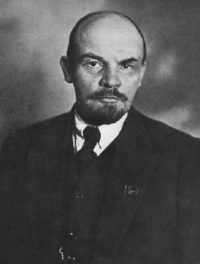 Vladimir Lenin (1870-1924) was the founder and leader of the Bolshevik Party and a central figure within the Marxist movement from the end of the 19th century until his death in 1924. In October 1917 he, along with Leon Trotsky, led the Russian Revolution that brought the Bolsheviks to power and established the first workers’ state.