
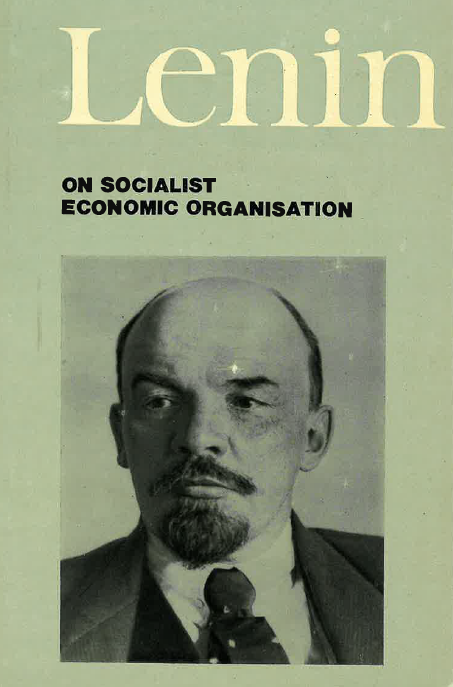
A century after the October Revolution, capitalism offers workers and young people nothing but austerity, permanent war, and a planet hurtling toward environmental catastrophe. The ruling class and its ideologists insist there is no alternative, that the chaos of the market is simply the natural order of human society. Lenin’s writings on socialist economic organisation demolish this lie from the ground up. Written in the crucible of 1917–18, when the Bolsheviks had just seized state power and faced the immediate, concrete challenge of reorganising an entire economy under conditions of imperialist encirclement and civil war, this text is the product of a revolutionary movement grappling with the most practical of questions: how does the working class, once it holds power, actually build a new social order? That the problems the Bolshevik’s confronted – how to organise production, overcome bureaucratic inertia, harness modern technique in the interests of the many rather than the few, and develop the political consciousness of the working class itself – are of burning relevance today.
What makes these writings so remarkable is their combination of strategic clarity and ruthless honesty. Lenin had no patience for phrase-mongering or empty revolutionary slogans. Against those “left communists” in the Bolshevik Party who confused radical-sounding ultimatums with genuine Marxist analysis, he insisted on the necessity of grasping the actual economic and social conditions that the workers’ state confronted, including the unavoidable transitional role of state capitalism on the road to socialism, and the absolute centrality of labour discipline, accounting and control. His insistence that “accounting and control” are the chief tasks after the conquest of power cuts against every form of spontaneism and bureaucratic substitutionism simultaneously, and retains its full force today.
For workers facing speed-ups, wage theft, and the destruction of public services; for young people confronting a future mortgaged to the financial aristocracy; for anyone trying to understand why the immense productive capacity of modern society coexists with poverty, inequality and war, this book provides indispensable intellectual tools. Lenin demonstrates that the chaos and waste of capitalism are not inevitable features of complex modern economies, but the specific product of production organised around private profit and the subordination of social need to the imperatives of accumulation. The socialist organisation of economic life must be democratic, planned and based on the conscious participation of the working class, it is a historic necessity.
 Vladimir Lenin (1870-1924) was the founder and leader of the Bolshevik Party and a central figure within the Marxist movement from the end of the 19th century until his death in 1924. In October 1917 he, along with Leon Trotsky, led the Russian Revolution that brought the Bolsheviks to power and established the first workers’ state.