On Culture and Cultural Revolution brings together V.I. Lenin’s writings on one of the most contested and consequential questions facing any revolutionary movement, what happens to culture, education, and the inherited intellectual life of society once the working class takes power. This volume compiles Lenin’s speeches, articles, and directives on literacy campaigns, the reorganisation of education, and the relationship between the party and artistic and intellectual life in the early Soviet republic.
Lenin grappled with the problem of how to raise the cultural and educational level of a population emerging from tsarist backwardness, while resisting the demand, strong among some of his own contemporaries, to declare a wholesale rejection of “bourgeois culture” and improvise a hastily invented “proletarian” substitute. Against the ultra-left currents represented by Proletcult, Lenin insisted that socialism could only be built by critically absorbing and mastering the genuine cultural and scientific achievements of the past. “For a start,” he retorted to those who proposed to “burn the Raphaels,” “we should be satisfied with real bourgeois culture.” His draft resolution On Proletarian Culture states the principle in full: “Marxism has assimilated and refashioned everything of value in the more than two thousand years of the development of human thought and culture.”
For Lenin, the cultural question was inseparable from his final political struggle against the growth of the bureaucracy centred around Stalin. In his last speeches and the articles he dictated from his sickbed, “Better Fewer, But Better” and “How We Should Reorganize the Workers’ and Peasants’ Inspection”, Lenin posed the question with brutal clarity. Of Moscow’s Communists in responsible posts, he asked: “Who is directing whom?” His answer was that the old officials’ culture, “miserable and low as it is, is higher than that of our responsible Communist administrators.”
Lenin’s insistence that the working class must master “everything of value” in two thousand years of human culture is a direct rebuke to this contemporary philistinism.
Pages: 288
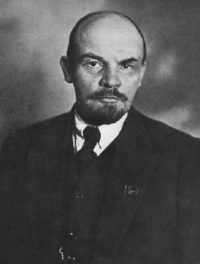 Vladimir Lenin (1870-1924) was the founder and leader of the Bolshevik Party and a central figure within the Marxist movement from the end of the 19th century until his death in 1924. In October 1917 he, along with Leon Trotsky, led the Russian Revolution that brought the Bolsheviks to power and established the first workers’ state.
In 1902 Lenin published What is to be Done?, a major theoretical work which critiqued the trade unionist perspective that sought to limit the struggles of workers to economic questions. He insisted on the necessity of a political solution to capitalist exploitation and outlined a theory of the revolutionary party as the vanguard of the working class.
Lenin led the split with the Mensheviks in the Russian Social Democratic Party in 1903, maintaining that the forthcoming revolution in Russia could not be of a solely bourgeois-democratic character. Over the course of the next 14 years he fought a long struggle against Menshevism. This ultimately culminated in his issuing in April 1917 of a set of political theses that unequivocally called for a proletarian socialist revolution in Russia.
Lenin was an ardent defender of internationalism. In 1914, when the German Social Democratic Party, the leading section of the Second International, abandoned Marxism by supporting German imperialism in World War I, Lenin fought against this national chauvinist perspective. In defense of the outlook of world revolution, he advocated the founding of the Third International. His Imperialism, published in 1917, identified the origins of the bloodbath engulfing Europe at the time in the inner workings of capitalism.
Lenin made major contributions to the development of Marxist philosophy, leaving behind a voluminous body of writings. Materialism and Empirio-Criticism was his defense of dialectical materialism and a withering critique of efforts by figures with ties to the Bolshevik Party to substitute idealist forms of thinking for materialist philosophy.
Lenin died in January 1924 after a series of strokes, which had left him incapacitated for many months prior. In his Last Testament, suppressed for many years by the rising Soviet bureaucracy, he called for the removal of Joseph Stalin from his post as General Secretary of the Communist Party of the Soviet Union.