
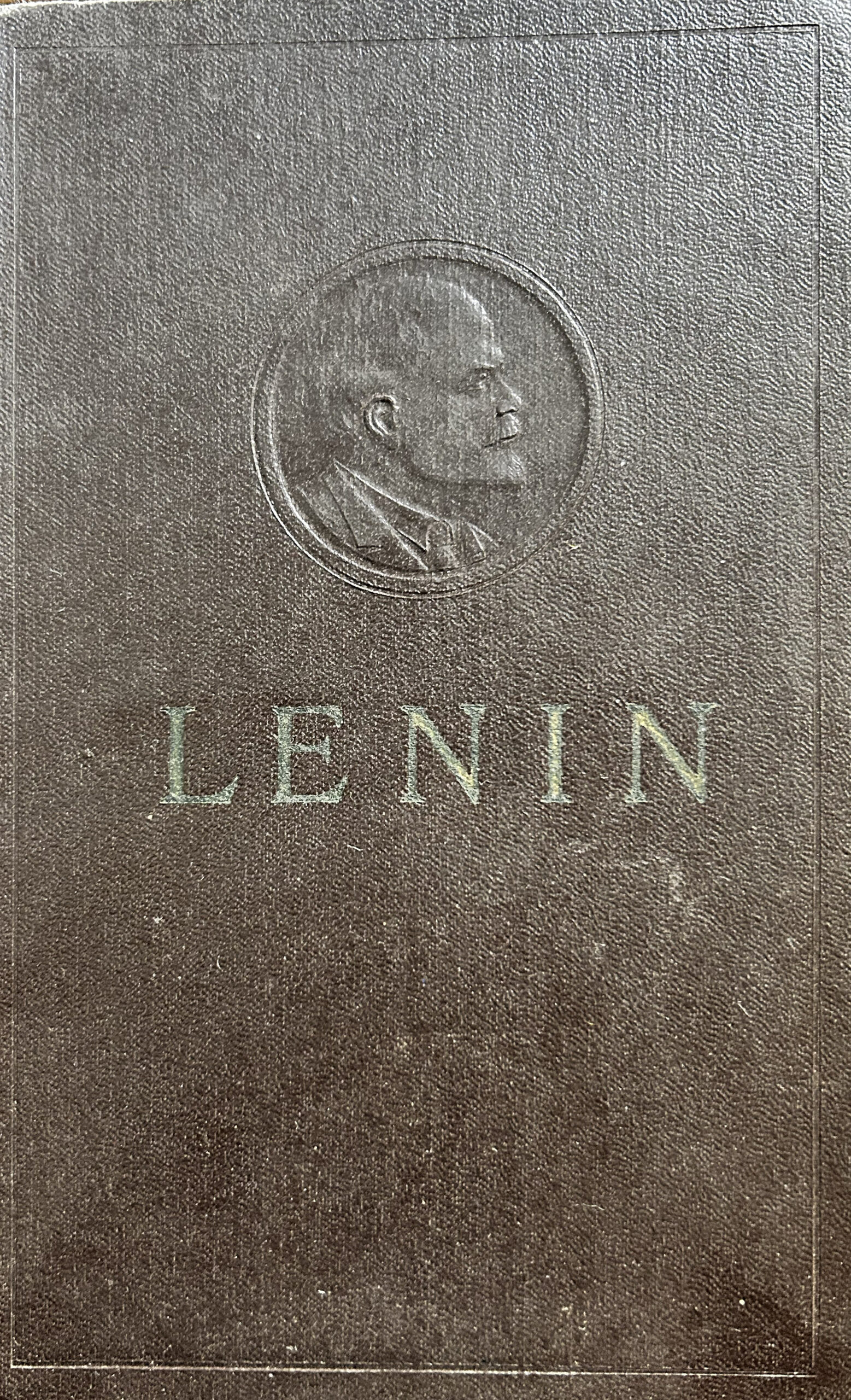
Written between 1895 and 1916, and centred above all on the intensive philosophical work Lenin undertook during the First World War, the Philosophical Notebooks constitute one of the most important theoretical documents in the Marxist tradition. At their core are Lenin’s conspectuses, the critical working notes on Hegel’s Science of Logic, Lectures on the History of Philosophy, and Lectures on the Philosophy of History, alongside studies of Aristotle, Feuerbach, Lassalle, and others stretching from Heraclitus and Democritus through to Marx and Engels. The central task Lenin set himself was to extract from Hegel’s idealist system its genuine dialectical content and reground it on materialist foundations. To rescue, as he put it, the “logical and epistemological nuances”. The result is not a finished philosophical treatise but something in many ways more revealing: the working laboratory of a revolutionary thinker grappling with the deepest problems of method, knowledge, and historical movement.
The historical context in which this work was produced is inseparable from its content. Lenin devoted his attention to philosophy, and above all to Marxist dialectics, precisely during the First World War, a period in which all the contradictions of capitalism became extremely acute and a revolutionary crisis matured. The collapse of the Second International into social-chauvinism, with party after party voting war credits for their own ruling class, urgently posed the question of theoretical method. How does opportunism arise, what is its philosophical foundation, and how must Marxism arm itself against it? Only materialist dialectics provided the basis for a Marxist analysis of the contradictions of imperialism, revealing the imperialist character of the war, exposing the opportunism of the leaders of the Second International, and working out the strategy and tactics of struggle of the proletariat. Lenin’s Philosophical Notebooks are thus the theoretical foundation from which Lenin’s great political writings of this period, including “Imperialism, the Highest Stage of Capitalism” and “State and Revolution”, directly grew.
Today the world is again convulsed by imperialist war, the pseudo-left that has once more capitulated to its own ruling classes, and the labour bureaucracies are suppressing every genuine movement of the working class. These are not new phenomena but the recurrence of tendencies that only dialectical materialism can adequately explain and combat. To study the Philosophical Notebooks is to engage with the method that made the October Revolution possible, and to develop the theoretical weapons necessary for the revolutionary struggles ahead. This is essential reading for every serious student of Marxism.
Pages: 638
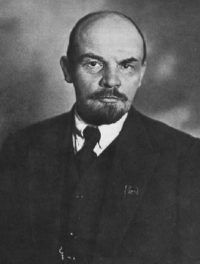 Vladimir Lenin (1870-1924) was the founder and leader of the Bolshevik Party and a central figure within the Marxist movement from the end of the 19th century until his death in 1924. In October 1917 he, along with Leon Trotsky, led the Russian Revolution that brought the Bolsheviks to power and established the first workers’ state.